
.webp)




.png)

For small and medium-sized companies, a clearly structured marketing budget is a decisive success factor. Although many SMEs regularly invest in advertising or marketing measures, without clear planning and strategy, the budget is often used inefficiently.
This is exactly where a professionally planned Marketing budget for SMEs on. It helps companies to allocate their marketing resources wisely and utilize long-term growth potential.
Especially in the digital age, companies are faced with a variety of marketing opportunities. Search engine marketing, social media, content marketing, and digital advertising compete for attention and budget. Without a clear structure, marketing can quickly become expensive without delivering measurable results.
A strategically planned marketing budget enables companies to:
- better control over marketing costs
- targeted investments in profitable channels
- long-term brand development
- sustainable growth
Many companies today rely increasingly on digital marketing strategies such as [Google Ads agency for more visibility and customers]to reach their target group efficiently.
Marketing budget basics
Planning a Marketing budget for SMEs starts with a realistic assessment of available resources and business goals. Marketing should never be random, but should be based on clear strategic considerations.
Typical factors that influence a marketing budget include:
- company size
- sector
- competitive situation
- growth potential
- Target group structure
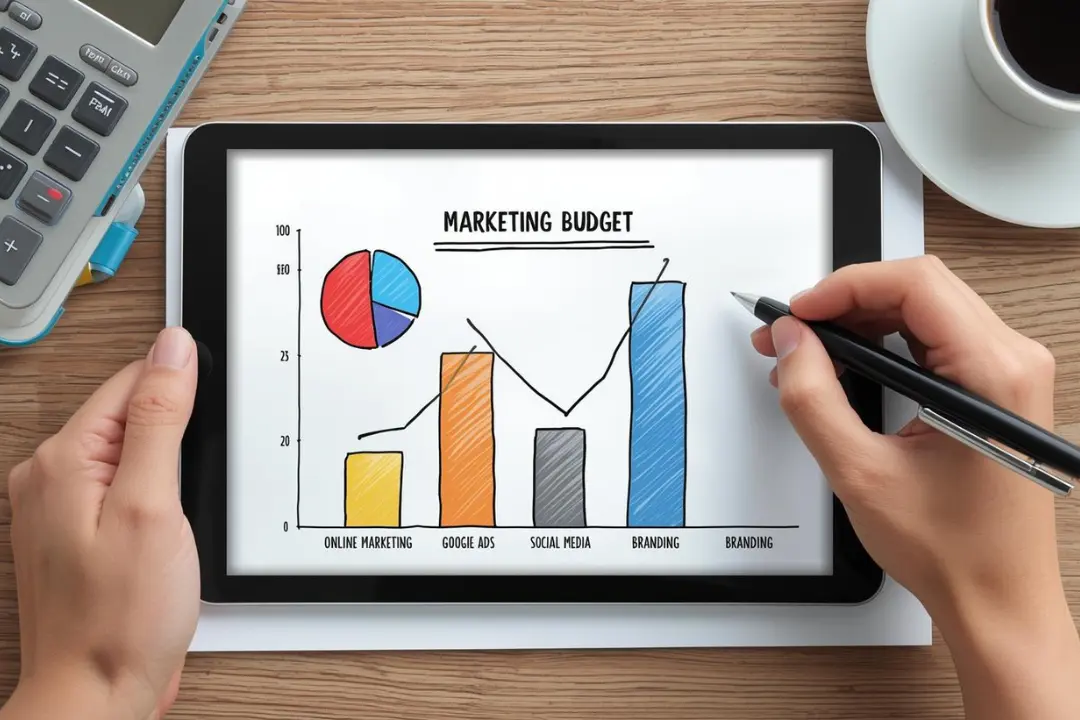
Many marketing experts recommend choosing between 5 and 10 percent of annual turnover investing in marketing. Companies in growth phases often invest up to 15 percent.
The marketing budget should be distributed across different areas:
Online marketing
- search engine optimization
- Google Ads campaigns
- social media marketing
content marketing
- blog articles
- videos
- company stories
branding
- corporate design
- brand strategy
- visual communication
Professional design plays an important role, especially when building a strong brand. Many companies therefore work with a [Graphic design agency for visual brand communication]to develop a consistent brand identity.
Marketing goals
Before a marketing budget is distributed, clear goals must be defined. Marketing without clear goals often results in inefficient campaigns and unnecessary spending.
Typical marketing goals include:
- more website visitors
- attract new customers
- Increase brand awareness
- Increase sales
Companies should formulate their goals as specifically as possible.
Examples of specific marketing goals:
- 30 percent more website traffic
- 20 new leads per month
- Top 10 Google ranking for important keywords
Many companies invest specifically in online advertising. A popular measure is [Let Google advertise with a clear strategy]to attract new customers quickly.
Marketing budget SME strategy
A successful Marketing budget for SMEs Strategy is based on an intelligent distribution of resources across various marketing channels.
Key areas of marketing include:
search engine marketing
- SEO optimization
- Google Ads campaigns
content marketing
- blog articles
- videos
- Social media content
Local marketing
- local search engine optimization
- Google Business Profile
- customer reviews
Local companies in particular benefit from a strong online presence. A professional [Google My Business Agency Munich visibility] can help to significantly increase local visibility.
marketing channels
The selection of the right marketing channels is decisive for the success of a marketing budget.
Important channels for SMEs include:
search engines
- Google search
- local searches
social media
content marketing
- Technical article
- tutorials
- corporate videos
Companies are increasingly focusing on high-quality content. Videos in particular are very effective for conveying emotional brand messages. Many companies therefore produce professional corporate videos with a [Image film agency for emotional corporate presentation].

Marketing budget planning
The practical planning of a marketing budget usually involves several steps.
analysis
- market analysis
- Competitive analysis
- Target group analysis
strategy
- Selection of marketing channels
- Defining marketing goals
Budget distribution
- Prioritize measures
- Defining investments
Many companies combine organic marketing with paid advertising. Campaigns with professional [Google Ads support for long-term performance].
contact
Get in touch
Consultation in 15 minutes
The experts of Klarwerk agency show you how your marketing budget can be used efficiently.
Marketing efficiency
A successful marketing budget is based on continuous analysis. Companies should regularly check which measures are actually delivering results.
Key figures include:
- Site Traffic
- Conversion rate
- Cost per lead
- Return on Investment
Through data analysis, companies can use their marketing budget more specifically.
Many companies therefore work with specialists, such as a [Google Ads freelancer for flexible implementation]to continuously optimize campaigns.
Marketing Trends
The marketing landscape is constantly changing. Digital technologies in particular influence marketing strategies.
Key trends in 2026 include:
- artificial intelligence in marketing
- data-based campaign optimization
- personalized advertising
- local SEO strategies
Traditional marketing measures also remain relevant. Many companies continue to use print media, for example with the support of a [Flyer design agency for effective print communication].

Marketing growth
A strategically planned marketing budget can significantly accelerate a company's growth.
Key success factors include:
- clear marketing strategy
- long-term planning
- continuous optimization
A professional website remains the foundation of every marketing strategy. Many companies therefore leave their [Have a company homepage created with a clear structure]to strengthen their online presence.
Start project
Start strategy now
or write directly
Die Klarwerk agency supports SMEs in planning, implementing and optimizing modern marketing strategies.
FAQ
How big should a marketing budget be?
Many SMEs invest between five and ten percent of their turnover in marketing.
Which marketing channels are important?
Search engines, social media and content marketing are among the most important channels.
Why is marketing planning important?
Clear planning prevents inefficient marketing spending.
How do you distribute a marketing budget?
The budget should be distributed across various marketing channels.
When is online marketing worthwhile?
Online marketing is particularly worthwhile for companies that want to attract new customers via the Internet.
conclusion
A professionally planned Marketing budget for SMEs is a crucial basis for long-term corporate success. Through clear goals, strategic budget distribution, and continuous analysis, small and medium-sized companies can use their marketing investments efficiently and achieve sustainable growth.
sources
Federal Association of Digital Economy