
.webp)




.png)

For small and medium-sized companies, the website is now one of the most important marketing tools. Customers obtain information online, compare providers and often make their purchase decisions before the first contact.
That is why a central question for many entrepreneurs is: Webflow or WordPress — which system is the better choice for SMEs in 2026?
Both platforms are among the most popular solutions worldwide for creating modern websites. According to current statistics, WordPress runs on 40% of all websites on the Internet, while Webflow is growing strongly, particularly in the areas of design, performance and modern web development.
For companies in Germany — particularly in economically strong regions such as Munich or Augsburg — choosing the right CMS is crucial for:
- Online visibility
- SEO performance
- charging speed
- maintenance costs
- scalability
In this comprehensive guide, you will learn which system really makes sense for your company and when Webflow or WordPress more suitable.
Webflow or WordPress basics
To make the right decision, you should first understand how both systems work.
WordPress is a Open source content management system, which has existed since 2003. It is based on a plugin system that allows websites to be extended almost indefinitely.
Webflow, on the other hand, is a modern All-in-one platform for web design, hosting and CMS. Here, design, development, and hosting are combined in a single environment.
Many companies have their websites professionally developed, for example via Have a company homepage created with a clear structureto create an optimal technical basis for marketing and SEO.
While WordPress is very flexible, Webflow is particularly impressive due to its integrated infrastructure and strong visual development environment.
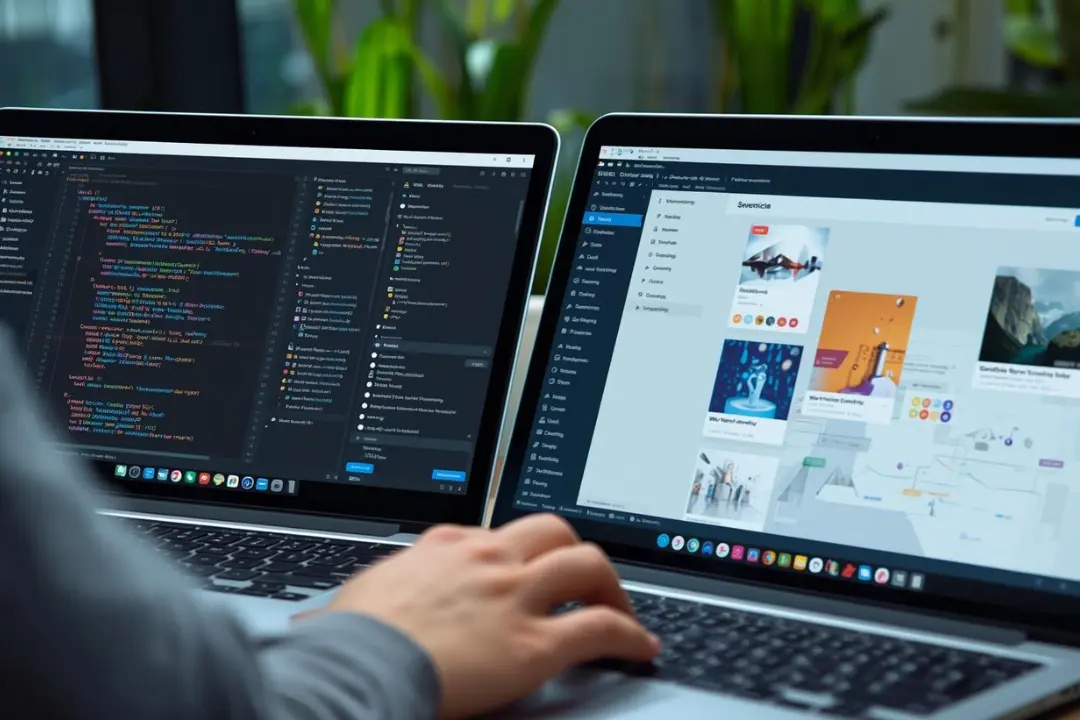
Importance of modern websites
For companies in 2026, a website is much more than a digital business card.
It is a central part of the overall marketing strategy.
A modern website performs several tasks at once:
- Source of information for customers
- Content marketing platform
- Basis for SEO rankings
- Trust factor for new customers
- Lead generator for inquiries
Especially for companies in cities such as Munich or Augsburg, a professional online presence is crucial, as competition in many industries is heavily digitalized.
A strong visual brand identity also plays a major role. That is why many companies also work with a Graphic design agency for visual brand communication together.
Webflow or WordPress performance
An important factor when deciding between Webflow or WordPress is the performance of the website.
Google rates websites based on load speed and user experience, among other things.
These factors are part of the so-called Core Web Vitals, which have a direct impact on rankings.
Webflow offers a few benefits here:
- integrated hosting
- automatic CDN
- optimized image compression
- clean code structure
WordPress can also be very fast, but it often requires additional plugins and technical know-how.
In particular, companies that also Let Google advertise with a clear strategy, benefit from fast websites, as load times also influence the conversion rate.
Webflow or WordPress SEO
Search engine optimization is one of the most important aspects of any business website.
The question is therefore often: Which system is better suited for SEO?
The answer is differentiated.
WordPress offers many SEO plugins, such as:
- RankMath
- Yoast SEO
- All in One SEO
Webflow, on the other hand, already integrates many SEO functions directly into the platform:
- structured data
- automatic site map
- clean HTML structure
- easy meta optimization
For companies that rely heavily on online marketing, SEO is often combined with paid advertising.
Strategies such as Google Ads for local and supra-regional reach while building visibility faster.
Also a professional Google Ads support for long-term performance can be useful for using marketing budgets efficiently.

Webflow or WordPress security
Security is an often underestimated factor when choosing a CMS.
WordPress is a frequent target of hacker attacks due to its widespread use. However, that doesn't mean WordPress is unsafe — it just requires regular maintenance.
Typical maintenance tasks with WordPress:
- Plugin updates
- Theme updates
- security backups
- server updates
Webflow, on the other hand, performs many of these tasks automatically.
This includes:
- automatic updates
- integrated safety mechanisms
- SSL encryption
- Managed hosting
For many SMEs, this means less technical effort.
Webflow or WordPress costs
The cost structure of the two systems is significantly different.
WordPress itself is free, but there are costs for:
- hosting
- Premium plugins
- servicing
- Safety solutions
- developer services
Webflow works with a clear pricing model that already includes hosting and CMS.
The monthly costs are typically between:
- €20 and €50 for simple websites
- 50€ to 150€ for professional business sites
This transparent pricing structure is attractive for many SMEs.
Webflow or WordPress design
When it comes to design, Webflow offers a particularly great deal of freedom.
Designers can create just about any layout without writing any code.
This makes Webflow particularly interesting for companies that value modern and individual websites.
Many brands combine design strategies with emotional storytelling, for example through videos from a Image film agency for emotional corporate presentation.
Traditional marketing measures can also support digital branding, for example by working with a Flyer design agency for effective print communication.
Contact for advice
The decision between Webflow or WordPress depends heavily on the individual requirements of a company.
If you are unsure which system is best for your company in Munich, Augsburg or all of Germany, a professional analysis can help.
contact record and have your website strategy reviewed.
telephone +49 151 6846 1306
email info@klarwerk-agentur.de
Well-founded advice quickly shows which platform is ideal for your goals, budget and growth strategy.
Webflow or WordPress scaling
Scalability plays an important role for growing companies.
Webflow is particularly suitable for:
- Marketing websites
- Corporate websites
- landing pages
- Content strategies
WordPress, on the other hand, offers advantages for:
- major content portals
- complex plugins
- community platforms
- E-commerce with WooCommerce
However, for many SMEs, a powerful marketing website is enough.
Webflow or WordPress decision
When deciding between Webflow and WordPress, companies should consider several factors.
Important questions include:
- How big is the website?
- Who supervises the technology?
- Which marketing strategy is being followed?
- How important is design?
- How big is the budget?
In many cases, it turns out that Webflow is a very efficient solution, particularly for modern corporate websites.

Start website strategy
Choosing the right platform is an important step—but it's just the start.
A successful website also requires:
- clear marketing strategy
- search engine optimization
- content marketing
- Performance tracking
Start your professional website strategy now.
Contact the Klarwerk Agency UG and get individual advice.
telephone +49 151 6846 1306
email info@klarwerk-agentur.de
A modern website can become your company's most important growth driver.
FAQ
Which is better for SMEs Webflow or WordPress?
Webflow is particularly suitable for modern corporate websites, while WordPress offers more flexibility for complex projects.
Is Webflow better for SEO?
Both systems are SEO-enabled. Webflow offers many features already integrated, while WordPress uses plugins.
Is WordPress cheaper?
WordPress is initially free, but there are costs for hosting, plugins and maintenance.
Which platform is more secure?
Webflow automatically applies many security updates. WordPress requires regular maintenance.
Which platform is easier to use?
Webflow offers a visual interface, while WordPress uses a classic CMS structure.
conclusion
The decision between Webflow or WordPress for SMEs depends on the individual requirements of a company. WordPress offers tremendous flexibility and a huge plugin library. Webflow, on the other hand, impresses with its performance, security and modern design.
For many companies in Germany — particularly in dynamic regions such as Munich or Augsburg — Webflow can be a particularly efficient solution for modern marketing websites.
Ultimately, it is not just the platform that is important, but a well-thought-out digital strategy that combines SEO, content and online marketing.
sources
bvdw org