
.webp)




.png)
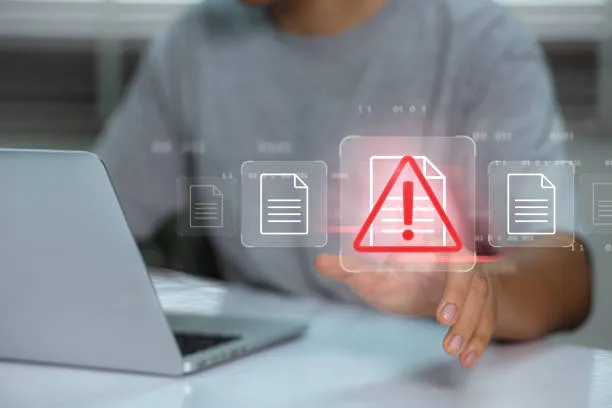
The most common accounting mistakes — and how to avoid them — are a central issue that affects many companies.
.webp)
This involves identifying typical sources of error and specifically preventing them so that accounting functions smoothly.
It is important to regularly record complete receipts, to clearly separate private and business expenses and to prevent accounting errors.
This allows you to keep track of things and save time and money.
With clear processes and modern software, many errors can be easily avoided.
In this article, you will learn exactly what is important and how to avoid typical stumbling blocks.
You can find more practical approaches for clean bookkeeping in our 10 tips for efficient accounting organization.
Identify and prevent data entry errors

Identify and prevent data entry errors is essential for accurate bookkeeping.
1. Use digital software to minimize manual errors
2. Training for employees improves input accuracy
3. Regular checks help to identify errors at an early stage.
4. Automated review mechanisms immediately identify discrepancies.
5. Clear processes and checklists help prevent errors.
This keeps your accounting accurate and reliable.
Key keywords include data entry, error prevention, accounting software, control, automation.
These also help in an SEO context.
One of the most common sources of accounting errors is incorrect data entry.
This can happen as a result of simple typing errors or the incorrect entry of amounts into the accounting software.
To avoid these errors, you should take the following steps:
Use automation
Using accounting software with automated features can significantly reduce the likelihood of input errors.
These software solutions often also offer functions for checking inputs that can identify and correct errors.
Using automation is very helpful in accounting.
1. It saves a lot of time because many tasks are completed automatically.
2. Errors are reduced as machines work more precisely.
3. It enables real-time data that can be viewed immediately.
4. Digital systems such as Klarowik make them easy to use.
5. This allows you to concentrate on important tasks and is always well informed.
Automation makes bookkeeping safer and more efficient.
To prevent such errors from occurring in the first place, it is worthwhile to clearly define processes and review them regularly.
Careful review
Manually checking the entered data can help identify errors at an early stage.
Make sure that all data is entered correctly and completely before you save or process it further.
Careful audit is the key to error-free accounting.
1. Regular checks help to identify errors quickly.
2. Bank reconciliations and document checks ensure accuracy.
3. Correct documentation protects against tax audit issues.
4. Practical checklists make work easier.
5. Thanks to these measures, your accounting remains transparent and reliable.
In this way, you avoid stress and financial risks.
Accounting tips
Doing bookkeeping correctly is important for every company.
That's why there are some valuable tips that can help you.
First:
Make sure that the document is entered in full.
Without all supporting documents, accounting can quickly become inaccurate.
Second:
Clearly separate personal and business expenses.
This helps you avoid confusion and errors.
Thirdly:
Meet all deadlines for tax payments and reporting.
This protects against penalties and problems with the tax authorities.
It is also important to regularly reconcile your accounts and transactions.
This allows you to identify errors early on and correct them quickly.
Automate processes with accounting software where possible.
This saves time and reduces errors.
Check the data regularly, even if you use software.
This increases reliability.
All of these tips will help you keep your bookkeeping hassle-free and error-free.
This gives you more time for your core business.
With good organization and the right tools, you can significantly improve your financial overview and ensure the success of your company.
Avoid incomplete document entry
Documents are the backbone of all accounting.
Incomplete or incorrect document entries can lead to significant problems, particularly during tax audits.
.webp)
To ensure that your receipts are fully recorded, follow these tips:
Use a document management system
A digital document management system can help to store all documents centrally and clearly.
This not only makes it easier to record, but also to track and check the documents later on.
Regular review
Routine reviews of collected receipts can help identify missing or incomplete documents.
Set regular intervals to review and complete your receipts.
Avoiding incomplete document entry is an important step to prevent accounting errors.
If receipts are missing or disorganized, this can lead to problems with the tax audit.
Companies should therefore always ensure that all documents are recorded completely and properly. Here are a few tips:
- Collect all receipts right after the purchase or transaction.
- Use digital tools, such as Klarowik software, to enter documents quickly and securely.
- Scan receipts instantly with your smartphone and save them centrally.
- Organize documents systematically, for example by date or type of issue.
- Carry out regular checks to ensure that all documents are available and stored correctly.
- Train employees how to use the documents and how to record them correctly.
With these measures, you can achieve reliable accounting, which makes you relaxed and secure.
Use modern tools and processes so that document entry does not become incomplete.
In this way, Klarwerk provides support with your accounting so that you don't overlook anything.
If you start as a self-employed person, our Step-by-step guide for easy bookkeeping with the most important basics.
Clean separation of private and business expenses
Clean separation of private and business expenses is an essential step for clear and orderly bookkeeping.

If you do this separation consistently, you will avoid confusion and errors during the tax audit.
It is important to keep two separate accounts right from the start: a business account for all operational payments and a private account for personal expenses.
Here are a few practical tips:
- Use a separate business account and not private accounts for business expenses.
- Never pay personal expenses with business cards or from a business account.
- Record income and expenses accurately and document them carefully.
- Make sure to divide operational and private costs accordingly, even with mixed use (e.g. car or telephone).
- Train employees and ensure clear bookkeeping processes.
With these measures, you retain control and save time when filing your tax return.
The accounting firm Klarwerk supports you with professional solutions so that this separation always works and allows you to work more relaxed.
Another common accounting mistake is mixing personal and business expenses.
This practice can not only lead to ambiguity in accounting, but can also have tax consequences.
A structured process not only reduces stress, but also increases the accuracy of your overall financial management.
Set up separate accounts
To avoid confusion, you should set up separate bank accounts for personal and business transactions.
This makes bookkeeping easier and ensures a clear separation of finances.
Set clear guidelines
Create clear guidelines for separating personal and business expenses.
These should be observed and adhered to by all employees to ensure consistency.
Avoiding accounting errors: practical tips

Avoid accounting errors: Practical tips are very important for companies to save time and money. Here is some simple and effective advice:
- Enter documents immediately: Photograph receipts directly with an app, such as Klarowik software.
- Set up fixed filing systems: Use a box or folder only for accounting documents.
- Regular routine: Set aside time weekly to sort receipts and review transactions.
- Observe deadlines: Set digital reminders so no tax deadlines are missed.
- Professional help: If necessary, hire an accounting service such as Klarwerk for advice and assistance.
In addition to the above measures, there are some general tips that can help you avoid accounting errors:
Regular training
Conduct regular training for your accounting staff to ensure they are aware of the latest procedures and software updates.
This can help to minimize errors and increase efficiency.
Duplicate bookkeeping
Duplicate bookkeeping is a proven system that helps to identify and avoid errors.
Recording each transaction in two accounts increases accounting accuracy.
External audit
Have an external auditor regularly check your books.
This can help identify errors that may have been missed internally and provides an additional layer of security.
We show in detail how digital tools save valuable time in our article on digital accounting.
FAQ:
- What are the most common accounting mistakes — and how do you avoid them?
The most common mistakes are incomplete receipts, incorrect bookings and missing deadlines.
It is important to collect all documents carefully and to meet deadlines.
This saves you time and hassle.
- How can I cleanly separate private and business expenses?
Keep separate personal and business accounts.
Never pay private expenses from a business account.
This keeps everything transparent and simple.
- Why is a complete document entry so important?
Without complete supporting documents, accounting becomes inaccurate.
This can cause problems during tax audits.
Use digital tools to securely capture receipts.
- What role does automation play in accounting?
Automation saves time and minimizes errors.
Many processes, such as account reconciliation or payment reminders, can run efficiently this way.
- Can I do the bookkeeping myself or should I outsource it?
Small companies can book themselves with good tools.
In complex cases, an accounting firm like klarwerk helps to ensure that everything runs correctly and you remain relaxed.
conclusion
Failure in the bookkeeping can be costly and time-consuming, but with the right measures, they can be avoided.
By using technology, careful auditing, and clear guidelines, you can optimize your accounting processes and ensure that your financial data is accurate and reliable.
Remember that prevention is always better than aftercare — invest in the right tools and training to prevent accounting errors in the first place.
With these tips, you are well equipped to avoid common accounting errors and make your bookkeeping efficient and error-free.
ClearWorks Business Service
www.clearworks-bs.com
+49 157 9249 7112
+49 89 3816 9101.