
.webp)



.png)
Today, a strong community is more than just “answering comments.” It is a real growth engine: for trust, brand loyalty, product feedback and long-term sales impact. This is exactly where a Community Management Agency to: It turns range into relationship — and relationship into loyalty.
For this to succeed, three things are needed: a clear community strategy, reliable Moderating social media and measurable community engagement. In this article, you'll get practical, well-founded instructions: from setup and guidelines to KPIs, crisis management and Community management costs — with specific examples, checklists and processes that work in reality.

What is community management
Community management means actively accompanying a digital community — with structure, tone, rules, empathy and consistency. It's about people, not “followers.” And it's about the framework in which people can talk to each other without losing quality, safety and brand values.
Typical tasks in community management:
- Answer questions, provide orientation, explain processes
- Moderate, de-escalate, set limits
- Collect feedback and make it usable internally
- Promote regular members, actively integrate new members
- Identify risks (spam, trolls, hate speech, fake news)
- Live your brand voice in a form of dialogue
Important: Not all community management is the same as social media management. Social media management plans and publishes content. Community management is the dialogue afterwards — and often the part that determines trust.
Why communities are growing
Communities don't grow because you “post more.” They grow when people feel seen, when answers come reliably and when rules are enforced fairly.
The most common growth drivers:
- Quick, consistent responses: People stay when they notice that someone is there.
- Useful conversation opportunities: Questions, surveys, clear topics instead of empty phrases.
- Safety and clarity: Without rules, louder voices dominate.
- recognizability: Sound, posture, format and rhythm must be stable.
- Common identity: The feeling of “we” is created through repeated positive interactions.
If you want to combine community building with performance goals, it's worthwhile to plan the interplay between paid and community cleanly — for example in parallel with Performance marketing agency More leads for SMEs. This not only creates clicks, but also relationships.
Community management agency benefits
One Community Management Agency provides not only capacity, but above all a system. The difference between “we just react” and professional community management is measurable: fewer escalations, clearer processes, faster answers, better data quality for product and sales.
An agency typically brings:
- strategy: Target image, platform role, topic logic, escalation logic
- operation: moderation, answers, community maintenance, quality assurance
- Guidelines: netiquette, tonality, dealing with borderline cases
- measurement: KPI system, reporting, derivations, optimization
- Crisis routine: Early warning signals, playbooks, clear responsibilities
When is it particularly worthwhile?
- When comments/DMs increase noticeably and no one has “ownership” internally
- When hate, provocation, or sensitive topics become more frequent
- When multiple channels/languages/locations need to be served
- When community is relevant for recruiting, support, or sales
- If you want to protect brand values in dialogue
And: Community management becomes even stronger when it is embedded in a clean overall architecture — similar to Planning online marketing campaigns From idea to results. Each format then pays off to a destination.
Develop community strategy
A good community strategy Does not answer “What are we posting? “, but:
- Why does our community exist?
- What role does it play in marketing, support, product, HR?
- What should members get from us that they can't get elsewhere?
Clearly define goals
Typical goals (not all at the same time, please):
- Strengthen trust and brand loyalty
- Relieve support (FAQ, self-help, orientation)
- Gain insights (pain points, feature requests, target group language)
- Build advocacy (recommendations, UGC, testimonials)
- Reduce crisis risks (de-escalation, clear rules, documentation)
Community funnel instead of content funnel
Think in stages:
- Arrive: clear orientation, pin post, highlights, “How it works”
- Participate: easy interaction formats (questions, votes)
- Co-create: feedback rounds, Q&As, challenges, co-creation
- Become an ambassador: UGC, recommendations, moderation assistance, events
Set platform roles
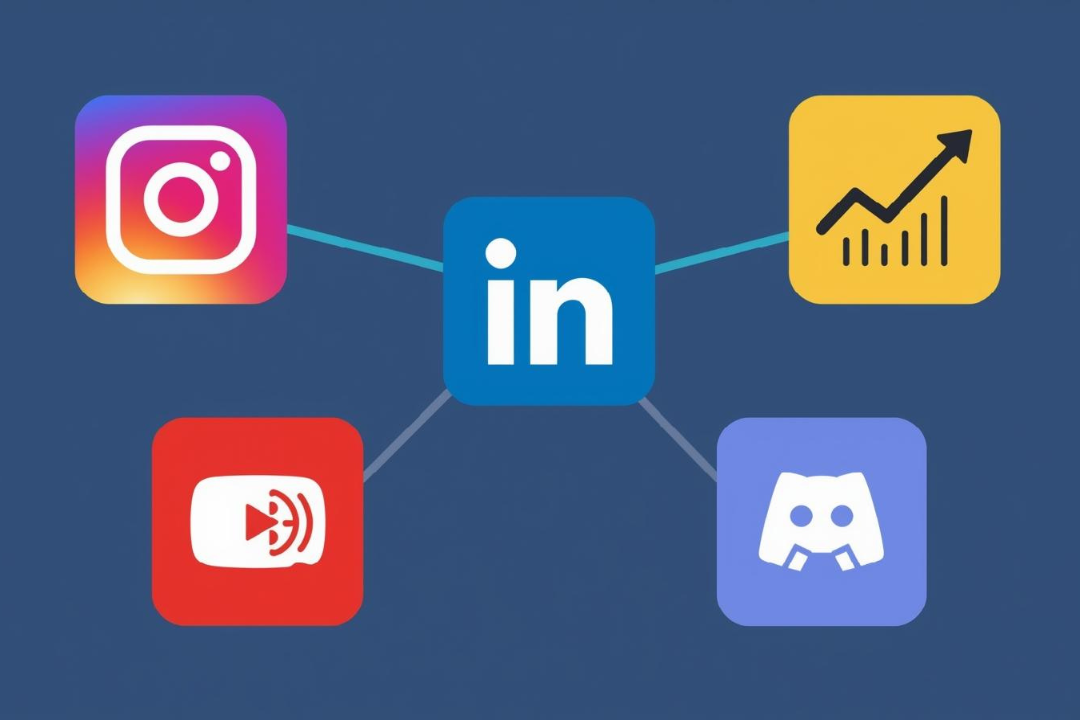
Not every platform is “the community.” example:
- Instagram: quick proximity, comment dialogue, story interaction
- TikTok: community atmosphere, humor, trends, rapid escalation possible
- LinkedIn: professional discussions, employer branding, thought leadership
- YouTube: deep comments, expertise, longevity
- Discord/forum: real community structure, roles, moderation systems
Roles and processes
Community management rarely fails due to motivation — usually due to a lack of processes. You need clarity: Who answers? How fast? With which tone? What is “critical”?
core roles
- Community Lead: Strategy, Quality, Escalation, Interfaces
- presenter: Respond, enforce rules, lead discussion
- Content Lead: Topic planning, format logic, translating community signals
- Brand/Legal Contact: borderline cases, legal issues, approvals
- Support/sales interface: Take on cases, provide feedback
Define response times realistically
Exemplary guidelines (customizable):
- Comments: within 4—24 hours (depending on channel and risk)
- DMS/inquiries: 24 hours, faster for hot leads
- Critical content: as quickly as possible, with clear standard routines
To ensure that speed does not come at the expense of quality, templates and clear rules are needed — similar to how you set up the basics properly with SEO before you scale, for example in DIY SEO: Tips for beginners.
Moderating social media
Moderating social media is the ultimate discipline: You protect discussions without suffocating the community. The aim is not to “delete everything”, but to ensure quality.
presentation styles
- escorting: Ask questions, provide context, on equal footing
- Lenkend: Reducing off-topic, reminding rules, keeping them constructive
- Boundary: Consistently stop insults, discrimination, threats
- De-escalating: Acknowledge emotions, slow down, offer options
Practical tactics that work
- mirroring: “I hear that X frustrates you...”
- Separate facts vs. feelings: “Let's make the problem specific...”
- Provide options: “Here are 2 ways...”
- Use private channel: Always move sensitive data to DM/email
- Clearly identify borders: “We like to discuss critically, but without...”
Virtual house law and rules
In Germany, the basic rule is: You can set and enforce rules on your channels (netiquette) as long as you don't act arbitrarily. There are additional requirements for large platform providers, e.g. under the Network Enforcement Act (NetzDG).
There are also practical handouts from German media outlets on how to deal with hate comments, which explain moderation, patterns and procedures.
Create community guidelines
Community guidelines are your seatbelts. They protect members, team, and brand. Good guidelines are short, specific and enforceable.
What should be included in guidelines
- What does the community stand for (goal, values, tone)
- What is not allowed (insults, discrimination, threats, spam)
- What happens in case of violations (alert, delete, block, report)
- How you moderate (transparent, fair, documented)
- How to get help (contact, support, hotlines)
Exemplary formulations
- “Criticism is welcome — insulting language is not. ”
- “No personal information in comments. ”
- “We delete content that violates our rules and document moderation decisions. ”
To ensure that guidelines don't just remain “text,” teams need training and clear playbooks. If you build this in parallel with website and tracking quality, you'll save stress later — it's also helpful to have a look at Understanding cost factors in website optimization, because community KPIs often empty without a clean setup.
Increase community engagement
community engagement It is not an end in itself. It is a signal of relevance and relationship. But: Not every engagement is good (e.g. rage comments). Quality is decisive.
Engagement that creates loyalty
- Helpful answers (not just emojis)
- Recurring interaction (regular members)
- UGC and recommendations (voluntary contributions)
- Constructive discussions (not just dispute)
Practical formats
- Weekly question: “What was your biggest pain point this week? ”
- Myth vs. reality: brief clarifications on common mistakes
- Community Spotlight: Member features (when appropriate)
- Mini-challenges: “Show your setup”, “Share your tip”
- AMA: “Ask our team anything” with clear moderation
Psychological levers
- Quick recognition: Replies, likes, pinning good comments
- retry: same formats at the same time
- identity: clear posture and language
- surety: Enforce rules consistently
If you want to systematically increase engagement, it's worth treating it like performance: Hypothesis → Test → Evaluation → Optimization. For paid-based testing, it is often Google Ads optimize 10 quick performance levers A good thinking framework — even if it has “ads” in its name, the logic of the levers is transferable.
Tools and automation
Tools don't replace feeling — but they create stability. The decisive factor is: Automation must not destroy the sound.
Useful tool categories
- Inbox management: bundle comments, DMs, mentions
- Moderation filter: keyword lists, spam protection, block lists
- templates: answer modules, tonality, escalation phrases
- Social listening: topics, moods, brand mentions
- documentation: ticketing, notes, screenshots, escalation logs
Automation that helps
- FAQ answers as “Quick Replies”
- Auto alert for recurring questions (e.g. opening hours, contact)
- escalation label (e.g. “Legal”, “Support”, “Crisis”)
- Moderation queue for critical terms
If you're already running paid campaigns, community setup should fit in. Because every ad brings questions. To start the campaign, Advertise on Google Start your first campaign serve as planning logic so that community capacity is planned from the start.
Measure KPIs correctly
Without KPIs, community management becomes a gut decision. Good KPIs don't just measure “likes,” they measure impact.
Core KPIs for community management
- Response Time: How quickly do you really answer?
- Resolution Rate: How many cases are resolved?
- Sentiment: Positive/neutral/negative share (trend, not absolute truth)
- Returner: Proportion of recurring commentators
- Quality ratio: constructive comments vs. spam/hate
- Escalation rate: How often must escalation be carried out?
KPI set by goal
- Support relief: resolved cases, referrals, FAQ usage
- Brand: sentiment trend, advocacy, UGC, recommendations
- Sales: qualified inquiries from DMs, appointment bookings, lead quality
- Product: actionable insights, feature ideas, common problems
For a robust measurement system, it makes sense to combine social KPIs with website data. If you want to set this up in a structured way, you can contact Google Ads agency prices Find the right model Orient: Not because of ads, but because they often clearly explain how performance models and measurability are related.
Crises and Shitstorms
Crises rarely arise “suddenly.” There are usually signs: recurring criticisms, increasing aggressiveness, misunderstandings, false expectations.
Early warning signs
- Comment tone tilts in a short time
- Recurring allegations in similar words
- Lots of new accounts, unusual activity (troll waves)
- Emotional issues without clear context
- Screenshots/threads outside your own channel
Crisis playbook in 6 steps
- views: What happens, where, how fast?
- categorize: Criticism, misunderstanding, hate, targeted campaign?
- Key message: 1—2 clear sentences that apply everywhere
- moderation: Apply rules, de-escalate, document
- Internal loop: legal/PR/management depending on risk
- post-processing: Update learnings, process adjustments, guidelines
Practical guidelines for moderating, documenting and protecting the team help, especially when it comes to hate and digital violence.
If a crisis is intensified due to paid traffic (e.g. comments under ads), the ad strategy should also be reviewed — here it is sometimes worthwhile to ask whether a Advertising agency for Google Ads When is it worthwhileto better manage setup and risk.
Community management costs
Community management costs depend less on “number of followers” and more on effort and risk: comment volume, subject matter, channels, languages, response times, documentation requirements and internal coordination.
Typical pricing models
- hourly rate: good for starts, audits, short-term spikes
- Retainer: monthly support with clear hours/services
- Service packages: defined response times, channels, reporting routine
- hybrid: Retainer + additional hours in crises or campaigns
Standard market ranges as a guide
Depending on the provider and scope, Germany is often hourly rates in the range of approx. 50—120 €, with variations based on experience and specialization.
Other agencies often quote ranges of around 75—150 € per hour for consulting/support, depending on the scope of services.
With monthly budgets Depending on the package, channels and production share, bandwidths of a few hundred to several thousand euros are often described; individual overviews, for example, give 500—15,000 € per month as a rough framework for social media marketing services in total.
Important: Community management is not the same as “social media marketing as a whole.” But these ranges help to have a realistic window of expectation.
What really drives costs
- response time: 24/7 is significantly more expensive than 9 a.m. to 5 p.m.
- volume: comments, DMs, mentions, reviews
- complexity: product advice, legally sensitive issues, crisis risk
- lingua: Multilingualism increases coordination and quality assurance
- Approvals: many internal loops take time
- Reporting: Deep analyses instead of “screenshot reporting”
Practical tip: If you run Google Ads or performance campaigns in parallel, plan community capacity as a fixed part. Otherwise, you'll buy reach — and lose trust in the comments. For efficiency, it is often helpful to look at Google Ads optimize 10 quick performance levers, because the principle of “burning budget without a system” is easy to grasp there.
Agency selection criteria
Not every agency is suitable for community management. Many can do content — but not dialogue.
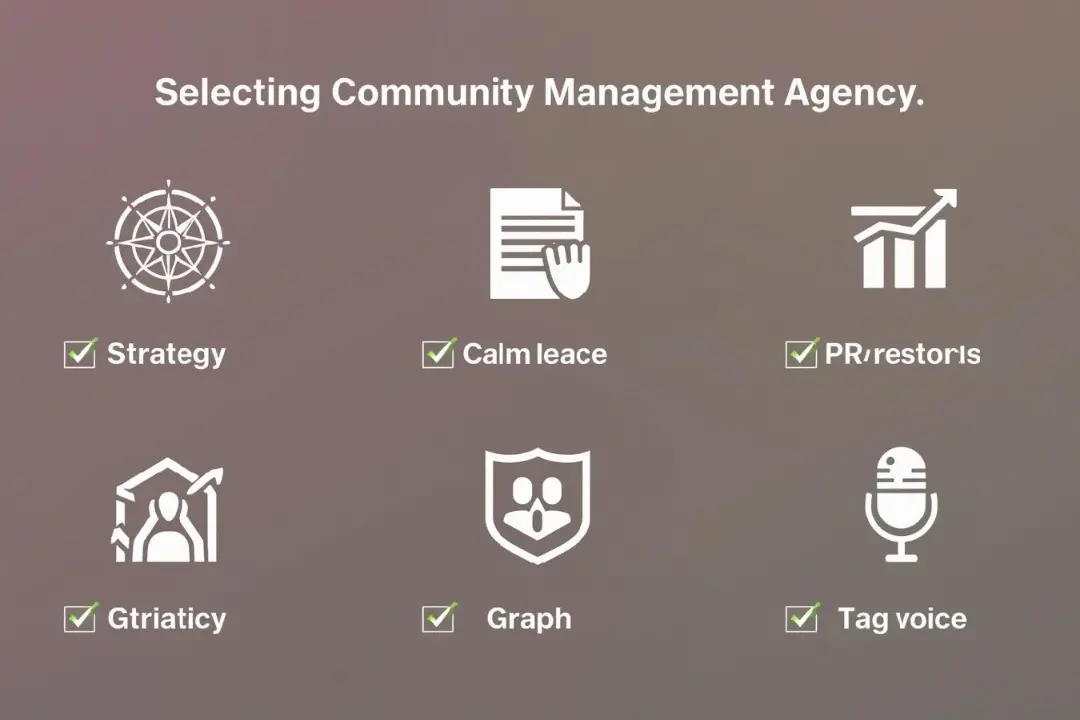
Selection checklist
- Strategy expertise: Is there a clear procedure for community strategy?
- Moderation experience: Can they de-escalate without appearing arrogant?
- Guidelines: Are community guidelines developed and implemented?
- Reporting: Is there a KPI system that fits business reality?
- Team protection: Are there rules for psychological stress and rotations?
- transparency: clear service packages, hours, processes, escalation paths
- Brand Voice: Can they match your tone — and keep it consistent?
Red Flags
- “We simply delete everything negative”
- No documentation in case of escalation
- No clear answer logic for sensitive topics
- KPI focus only on likes
- Unclear responsibilities (“do you do internal”)
If you see community management as part of an overall acquisition, the agency should also understand how campaigns, landing pages, and tracking work together — otherwise silos will arise. As a bridge into this way of thinking, Planning online marketing campaigns From idea to results be helpful.
Collaboration with Klarwerk
Klarwerk does not think of community management as a “mailbox” but as a system. The goal: an active, loyal target group that feels safe, is understood — and experiences the brand as reliable.
This is how clean collaboration typically works:
1 Audit and target image
- Channel and comment audit (volume, sound, risk topics)
- Definition of goals (brand, support, sales, product)
- Roles and Responsibilities
2 Setup and standards
- Tonality guide and answer modules
- escalation matrix (what where, when, how)
- Drafting and rollout of community guidelines
- Tool setup and documentation routine
3 Operation and optimization
- Moderating social media with fixed response times
- Community formats to increase engagement
- KPI reporting with clear derivations
- Monthly optimization sprints
If you use additional paid reach, we coordinate community processes and campaigns cleanly — so that you not only get clicks, but also maintain trust. For the evaluation of when ads should be linked to support/community, it is also Advertising agency for Google Ads When is it worthwhile a good framework for comparison.
Community Management Agency Start
If you've read this far, the direction is clear: Community doesn't happen by chance. It is created through strategy, reliable moderation and clear rules — and that is exactly what a Community Management Agencywhen she sets it up professionally.
So that you can get started right away, here is a compact start checklist:
Start checklist
- Set goal (s): Retention, Support, Sales, or Product
- Define platform roles (where is the real community?)
- Decide reaction times realistically
- Document response logic and tonality
- Clarify moderation rules and borderline cases
- Publish and consistently apply community guidelines
- Choose a KPI set that fits reality
- Prepare a crisis playbook
- Start tool setup and documentation
- Schedule regular reviews
To ensure that the community does not remain isolated, it is often worthwhile to optimize campaign and tracking basics in parallel — e.g. via Understanding cost factors in website optimization or Google Ads agency prices Find the right modeldepending on where you're standing right now.
1 ️ Start now a community setup with Klarwerk.
2 ️ Save time right awaybecause answers, guidelines and processes are in place.
3 ️ Only limited onboarding slots per month for clean care.
4 ️ Safe and predictable, with clear response times and a transparent process.
5 ️ Measurable resultbecause engagement, sentiment and leads are increasing in a structured way.
FAQ
What does a community management agency actually do?
She develops strategy, draws up guidelines, moderates comments/DMs, documents borderline cases and provides reporting with clear optimizations.
How quickly can you see results in community engagement?
Often within 4—8 weeks as a trend (response quality, sound, recurrence). Sustained loyalty usually takes 3—6 months.
Do I always need 24/7 moderation?
Not necessarily. Many brands do well with clear times plus escalation routines for critical issues.
What role do community guidelines play?
They create security, reduce conflicts and make moderation decisions comprehensible — for the team and community.
How do I realistically plan community management costs?
Focus on volume, response time, and risk. Retainers are usually more predictable than pure hourly billing.
conclusion
Professional community management is an investment in relationship — and relationships are the most stable competitive advantage in digital marketing. With a clear community strategy, consistent moderation of social media, clean community guidelines and a KPI system, “answering comments” becomes a predictable process that builds trust and supports growth.
If you don't want to leave community to chance, the next step is worthwhile: System instead of stress.