
.webp)




.png)
Content marketing is no longer a “nice to have” in Germany. Companies use content to become visible, build trust and generate predictable leads — especially in competitive regions such as Munich. One content marketing agency ensures that content is not created by chance, but has a strategic effect: with a clear target group, measurable goals, good timing and clean distribution.
In this guide, you'll learn how professional content marketing really works. You get a practical framework for content strategyHow do you a Create an editorial plan Can how inbound marketing works as a system, like you a Create lead magnet can, who converts, and how content distribution ensures that good content doesn't end up in the middle of nowhere.

Why growth needs content
Strategic growth means: you regularly get the right inquiries, build trust and become the first choice in your niche. In practice, this often fails not because of the product, but because of three marketing problems:
- Unclear positioning: Prospective customers don't immediately understand why you're a better fit.
- Too little trust: Especially at higher prices, evidence is needed, not just promises.
- Too little repetition: One contact is rarely enough. People need to see you multiple times.
Content solves exactly these points — when done strategically. You answer questions, show expertise, reduce risks and guide users to the request step by step.
An important reality check for Germany: Many companies strongly prioritize new customer acquisition and lead generation. In Bitkom surveys, new customers and leads are regularly named as top destinations.
That is the reason why content today is not just a “brand,” but part of the growth engine.
Content marketing agency benefits
One content marketing agency is valuable when it not only provides texts, but also allows growth to be planned. This is achieved through structure, processes and consistent measurement.
Typical benefits of an agency:
- Strategic clarity: Objectives, target groups, topics and channels are clearly defined.
- continuity: Content works through repetition — agencies ensure rhythm and quality.
- Conversion focus: Content is focused on leads, appointments, downloads, and sales.
- Distribution expertise: Outreach does not come naturally; good distribution is a must.
- scaling: Processes, templates, briefings and QA reduce team effort.
Important: An agency is no substitute for your expertise — they translate it into content that people understand and find.
If you want to combine content with performance, a clear integration makes sense — for example with Performance marketing agency More leads for SMEs. This gives you quick demand, while content stabilizes costs per lead in the long term.
Content marketing agency process
Most companies book content and hope for results. Professionals are turning it around: They build the system first, then production. One content marketing agency Ideally, work in clear steps.
1 Goals and KPIs
Before an article is created, it must be clear:
- What does “growth” mean in practice? Leads, calls, newsletters, applications, sales?
- Which target groups? Which industries? Which regions (e.g. Munich, Bavaria)?
- Which KPI is leading and which are supportive?
Practical example:
- Leading KPI: qualified contact requests per month
- Supporting: organic visibility, newsletter opt-ins, download rate, CRM quality
2 Customer Journey
Content must match the phase:
- Awareness: Understanding problems, providing orientation
- Consideration: Compare options, explain criteria
- Decision: Case studies, evidence, clear next steps
3 Theme architecture
Instead of “blog about everything”:
- Core topics (pillar)
- Sub-topics (clusters)
- Supporting formats (FAQ, checklists, templates)
4 Production with QA
- Briefing, structure, SEO, fact check
- Brand voice, examples, source logic
- Approval process, updates, versioning
5 Distribution and optimization
- Publishing is the start, not the end
- Content is distributed, measured, improved, recycled
If you consider the basis of your website right away, you'll save a lot of money later on. A good start is Understanding cost factors in website optimization. Because without clean website performance, even the best content fizzles out.
Build a content strategy
A strong content strategy is a decision document. It says what you're doing — and especially what you're not doing.
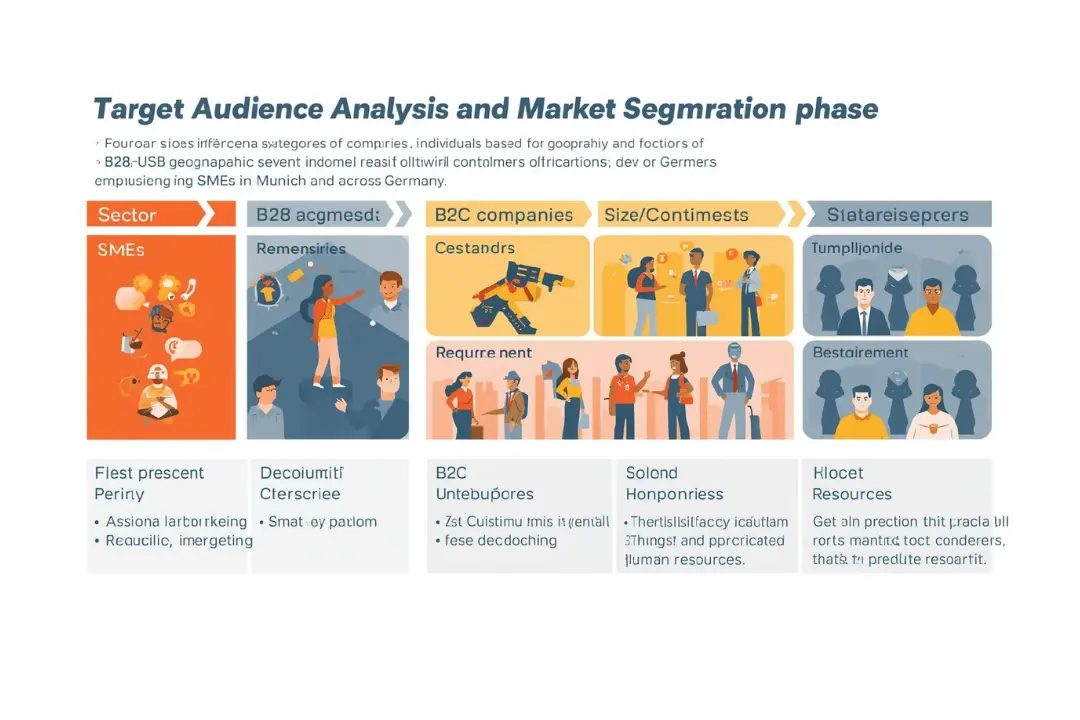
Module 1 Make target groups clear
Segmentation is particularly important for Germany and Munich because markets are tight. Work with at least:
- Industry and business model (B2B/B2C)
- Size (SME, Enterprise)
- Region (Munich, Bavaria, Germany-wide)
- Decision-maker types (GF, Marketing, Purchasing, HR)
Module 2 Operate search intent
The most important question:
- Is the person looking for information, comparison, or solution?
examples:
- “What is inbound marketing” → Information
- “Content Marketing Agency Munich” → Solution/Provider
- “Editorial plan template” → practical, immediately usable
Module 3 Defining messages
You need 3-5 key messages:
- What is your value proposition?
- What makes you different?
- What evidence is there?
- What risks are you taking?
Module 4 Planning formats
Content is more than a blog:
- Pillar pages, guides, checklists
- Newsletters, LinkedIn posts, Reels scripts
- webinars, PDFs, calculators, templates
- Case studies, comparison sites, FAQ hubs
If you want to approach SEO in a structured way but have to start internally, it helps DIY SEO: Tips for beginners as a solid basis for priorities.
Create an editorial plan
A good editorial plan is not a calendar, but a management tool. Anyone who only plans “appointments” often fails to meet requirements.
If you have a Create an editorial plan If you want, plan in three levels:
Level 1 Topic cluster
- 3—6 core clusters that are directly related to revenue
- per cluster: 1 pillar + 6—12 cluster articles
Level 2 format mix
- 60— 70% Evergreen (permanently wanted)
- 20— 30% timeliness (trends, news, events)
- 10% experiments (new formats, new channels)
Level 3 production workflow
- Briefing → Draft → QA → Approval → Publishing → Distribution → Update
Practical editorial plan rules
- Never write without a clear search intent
- At least 1 distribution block every week (not just “post”)
- Update the best content on a quarterly basis
- Recycle content: Article → Carousel → Newsletter → Video script
If you're also planning campaigns, content shouldn't run separately. Use content as a campaign basis — the principle is similar to Planning online marketing campaigns From idea to results.
Inbound marketing system
inbound marketing means: you attract people instead of hunting them. This works particularly well in Germany, where trust, verification and data protection are highly weighted.
Inbound consists of four elements:
- Attract: Content is found (SEO, social, PR, paid)
- Convert: Visitors become leads (forms, downloads, newsletters)
- Close: Leads become customers (nurturing, sales enablement)
- Delight: Customers become fans (onboarding, knowledge center, community)
Why inbound is strong in Munich
- High competitive density → differentiation is mandatory
- Higher purchasing power, but also higher expectations → Quality counts
- Many B2B decision makers → expert content beats “advertising talk”
Nurturing without spam
- clear consents
- meaningful content in follow-up
- segmented routes by interest
In e-mail marketing in Germany, double opt-in is not “literally” enshrined in the GDPR, but in practice it is often considered a legally secure method and standard recommendation.
This is important if your lead magnet later works via newsletter nurturing.
More leads with contact
If you notice that you are “somehow” creating content, but that there is no system behind it, this is the fastest lever:
1 ️ Get in touch now and start with a clear content roadmap.
2 ️ Immediate benefit through topic clusters, editorial plan and conversion setup.
3 ️ Limited places for strategy setups so that quality and speed are right.
4 ️ Safe process with transparent coordination and a clean fact-check.
5 ️ Specific result in the form of prioritized topics, formats and measurable KPIs.
Create a lead magnet
A lead magnet is an exchange transaction: value in exchange for contact. If you have a Create lead magnet If he wants to, he must solve an acute problem — quickly and specifically.
Lead magnet ideas that work
Particularly strong for B2B in Germany:
- “Vendor Selection” checklist
- “Briefing” or “Editorial Plan” template
- “ROI/ Budget/ Capacities” calculator
- Mini-guide “Avoiding mistakes”
- Industry report (own data or curated insights)
Quality beats scope
A 5-page PDF that solves a problem often converts better than 30 pages without focus.
Conversion modules
- clear headline with result
- 3-5 Bullet Benefits
- short forms (only what you really need)
- trust-building elements (data protection, references, examples)
Common mistakes
- too general (“e-book content marketing”)
- No clear use case
- too complicated download process
- no follow-up (nurturing is missing)
If you want to send leads via Google Ads to Lead Magnets in parallel, pay attention to landing page quality and tracking. This includes, for example, Advertise on Google Start your first campaign And later Google Ads optimize 10 quick performance leversso that lead costs don't get out of hand.
Scale content distribution
Ohne content distribution Even the best item remains invisible. Many teams underestimate distribution because it looks like “extra work” — but it is the difference between hobby and growth.
Think of distribution in three layers:
1 Owned Distribution
- Website, newsletter, blog, knowledge center
- internal linking, navigation, thematic hubs
- “Best of” collections, homepage slots
2 Shared Distribution
- LinkedIn, Instagram, YouTube, Communities
- Employees as multipliers (employee advocacy)
- Partnerships, co-marketing
3 Paid Distribution
- Retargeting to content
- Ads on Lead Magnets
- Top content boosters
The 1-to-10 principle
A strong article becomes:
- 3-5 social posts
- 1 newsletter
- 1 carousel
- 1 video script
- 1 checklist or mini template
When you plan paid distribution, it helps to understand the cost models — for example, about Google Ads agency prices Find the right model. This allows you to plan budgets realistically and accurately evaluate agency performance.
SEO and topic clusters
Content marketing and SEO go together. Especially in Munich, where local providers often target the same keywords, whoever covers topics better wins — not the one who advertises loudest.
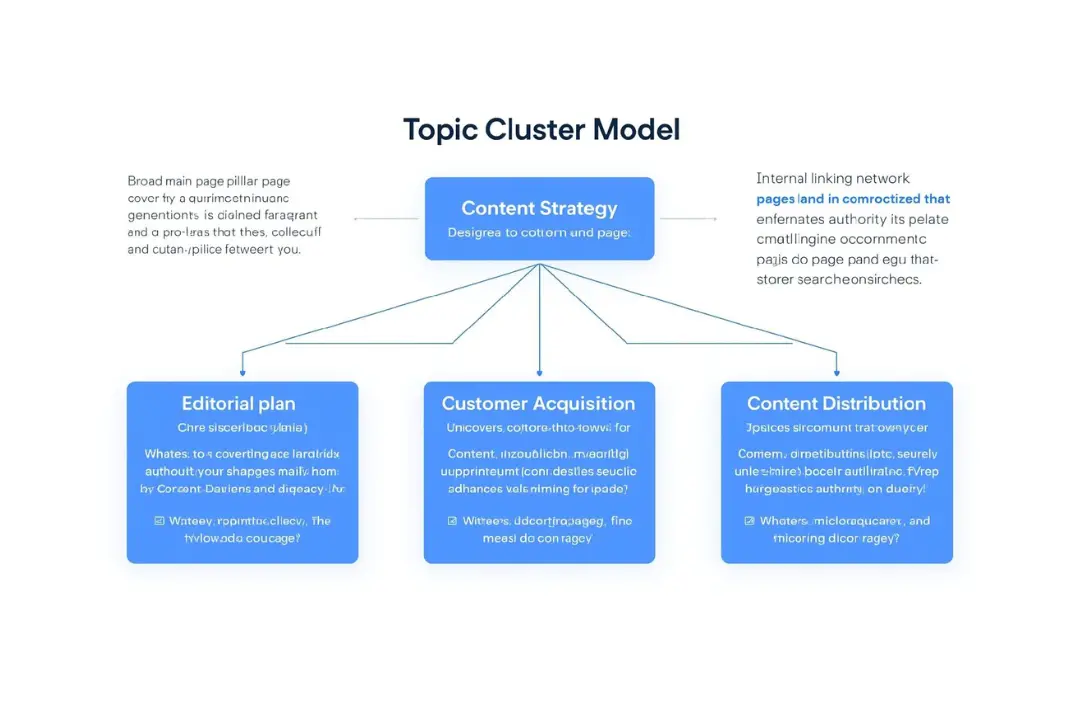
Topic clusters briefly explained
- Pillar Page: major main topic (e.g. content strategy)
- Cluster content: specific sub-questions (e.g. editorial plan, lead magnet, distribution)
- internal links: combine content logically and strengthen relevance
What Google prefers today
- clear structure, real answers
- helpful examples, checklists, steps
- regular updates
- Expertise and transparency
Content updates as a growth lever
Many teams are constantly producing new products instead of optimising. Better:
- Check top 20 pages quarterly
- add new questions
- Refresh examples
- improve internal linking
- Improve snippets (definitions, lists, steps)
If you're already using Google Ads, SEO can even indirectly relieve your CPCs because your brand is seen more often and trust increases. For the interplay, Advertising agency for Google Ads When is it worthwhile A useful orientation article.
KPIs and reporting
Without reporting, content becomes a gut feeling. Good KPIs are not “vanity,” but business-related.
Core KPIs for growth
- organic clicks (by cluster)
- Development of the ranking of core pages
- Leads per piece of content (downloads, inquiries)
- Conversion rate landing pages
- Time until request (nurturing period)
- CRM quality (MQL → SQL → customer)
Report rhythm
- weekly: operational signals (traffic, leads, top pages)
- monthly: cluster performance, conversion, distribution
- Quarterly: Strategy review, topic updates, new opportunities
Keep measurability realistic
Not every article delivers leads right away. Some content builds trust. That's why:
- Assign content to a funnel phase
- Measure micro-conversions (scrolls, clicks, newsletters)
- Evaluate clusters as a unit, not just individual pages
Team and roles
Strategic content marketing often fails due to capacity and coordination. The solution is clear roles.
Typical roles in the content system
- Content Strategist (goals, clusters, prioritization)
- SEO lead (search intent, structure, internal linking)
- Editor (quality, sound, editorial plan)
- designer/video (assets for distribution)
- Performance (paid distribution, retargeting)
- Sales/service input (FAQs, objections, practical questions)
Processes that save time
- reusable briefings
- Item structure templates
- fixed review slots
- Approval checklists
- Distribution content library
Budget and costs
A common question is: How much does content marketing cost in Germany? The honest answer: It depends on the goal, scope and quality standards.
Budget drivers:
- Number of contents per month
- Research and expert share
- SEO depth (clusters, updates, internal links)
- Distribution (Owned, Shared, Paid)
- Asset production (graphics, video, templates)
- Reporting depth and tools
Orientation: In Bitkom studies, content marketing in companies is often classified as an important or very important measure in the future.
This explains why budgets in practice often cover not just “texts,” but systems, processes and distribution.
Agency selection
Not every agency fits. A good selection saves months.
Good questions to ask an agency
- How do you develop a content strategy?
- How do you build topic clusters and internal links?
- How do you ensure fact-checking and quality?
- How do you integrate sales, service and product knowledge?
- What does your reporting look like — and which KPIs are leading?
- How do you organize distribution, not just publishing?
Red Flags
- only “deliver items”, no strategy
- no updates, just new production
- Reporting only in screenshots
- No clear positioning for Munich/Germany
- no processes for approval and quality
If you're already running ads, the agency needs to understand the connection. Otherwise, silos will arise. Practical starting points are Google Ads optimize 10 quick performance levers and Advertise on Google Start your first campaign, so that content and paid strengthen each other.
Win Munich locally
The following applies to Munich: You need local relevance plus professional depth. “We are in Munich” is not enough.
Local content levers
- local cases and industry examples
- Location pages with real services and FAQs
- Content that meets local search intent
- Google Business Profile and Review Strategy (as a supplement)
- regional events, partners, co-marketing
Local trust signals
- clear contact routes, quick response
- transparent processes
- References from the region (if available)
- clear statements about delivery area and target customers
Content marketing agency start
If you want strategic growth, the next step isn't “post more,” but build a system. One content marketing agency helps you do this because it brings together strategy, production, distribution and measurement — particularly important for Germany and a competitive market like Munich.
1 ️ Book a start call now and make sure you have a clear growth plan.
2 ️ Immediate effect through topic clusters, editorial plan and conversion optimization.
3 ️ Limited capacity for setups so that implementation and support can start quickly.
4 ️ Safe and structured, with transparent coordination and clean documentation.
5 ️ Measurable result through more qualified inquiries, better visibility and stable lead costs.
FAQ
What does a content marketing agency actually do?
She develops strategy, plans topics, produces content, distributes it in a targeted manner and measures results with KPIs.
How long does it take for content to bring leads?
First signals often after 4—8 weeks, stable lead flows usually after 3—6 months — depending on competition and implementation.
Why is content distribution so important?
Because good content barely gets reach without distribution. Distribution decides whether content works or is only available online.
How often should you update content?
Ideally, review top content on a quarterly basis and update it in a targeted manner at least 1-2 times a year.
What role does a lead magnet play?
It converts traffic into contacts and is the bridge between content and sales — particularly strong in inbound marketing.
conclusion
Strategic content marketing is a growth model, not a writing project. With clear content strategy, a plan when you have your Create an editorial plan Want a working inbound marketingsystem, a strong download when you have a Create lead magnet want, and more consistently content distribution “Content” becomes a measurable growth channel — especially in Germany and Munich.