
.webp)



.png)
Many campaigns start strong — and then fall off quietly. Not because the offer is poor, but because there is a lack of support: too few tests, unclear KPIs, no clean funnel, tracking gaps or creatives that quickly “get tired”. Right here brings a Campaign support agency The difference: It ensures that your campaigns not only go live, but steady deliver.
This article provides you with practical guidelines for Germany and Munich in particular: Which building blocks really count, how to manage your budget sensibly, which mistakes are expensive — and how to manage campaigns in such a way that results become more stable, even when auctions, CPMs and trends fluctuate.
Why care is important
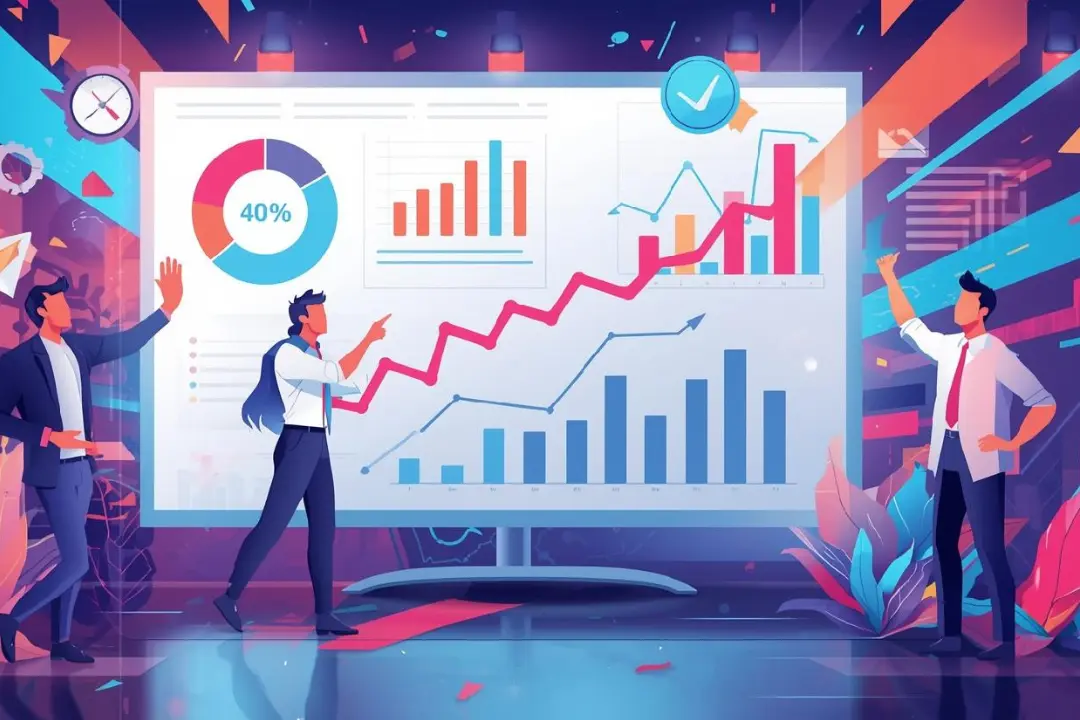
Campaigns aren't a project with an end date — they're a system. In practice, this means that something changes every week. Target groups react differently, competition books more, frequency increases, creatives lose impact. If no one then consistently follows up, typical patterns arise:
- Costs are risingeven though the setup remains “the same”
- Leads are getting worseeven though clicks look good
- Sales falterbecause the funnel doesn't grow with you
- Learnings are lostbecause there is no documentation
Good care creates stability through clear routines:
- weekly checks of the most important KPIs
- predictable creative tests
- clean event and tracking management
- structured optimization instead of “trial and error”
Especially when your campaigns lead to a website, the landing page often determines profit or loss. If you notice that there are clicks but requests are missing, that's a signal for conversion optimization. It fits very well for this: Landing page optimization agency: More leads with a system.
Define goals and KPIs
Consistent results start with a simple question: What is success — specifically?
Many campaigns fail because “more reach” or “more inquiries” is too imprecise. Professional support therefore starts with clear objectives:
1) Brand goals
- Coverage in a region (e.g. Munich)
- Brand recognition in a target group
- Video views or engagement as a preliminary stage
2) Performance goals
- Leads (appointment, request, demo)
- Sales (shop, booking, purchase)
- Applications (recruiting)
3) Efficiency goals
- Lower CPL/CPA
- Increase ROAS
- Increase lead quality (fewer “scrap leads”)
For KPIs to really help, they must be “funnel appropriate”:
- Oben: attention (view through, hook rate, reach)
- midst: Interest (CTR, landing page views, scroll depth)
- Down: Result (conversion rate, CPL/CPA, ROAS, completion rate)
Important: Not every number is equally important. For many companies in Germany, the Lead quality In the end, more decisive than the cheapest CPL. That is why clean support always includes a feedback loop with sales or team: Which leads really fit?
If you also want to build up reach and trust organically, Paid becomes significantly more efficient. A powerful lever for this is: Content marketing agency for reach, trust and leads.
Campaign support agency process
One Campaign support agency delivers results not through “tricks,” but through a clear process. A tried and tested process looks like this:
- Define target and offer
- Define funnel and landing page
- Secure tracking and measurement logic
- Set up campaign structure
- Plan and produce creatives
- Set a test plan
- Optimizing in fixed cycles
- Reporting, learnings, next steps
It sounds simple — but the difference is in the details: Which tests are prioritized? How is budget shifted? How are creatives iterated? And how do you prevent decisions from being made on the basis of gut feeling?
In Munich in particular, a structured process is important because many industries are heavily competing for the same target groups. Here, you don't win with “more budget,” but with clearer messages, a better landing page, and faster learning.
Briefing and Strategy
A strong briefing saves weeks. It is not “bureaucracy,” but clarity.
A good briefing answers:
- Who is the target group (cold/warm/hot)?
- What problem are we really solving?
- What is the specific offer (and why now)?
- What are the main objections?
- What evidence do we have (cases, figures, process)?
- Where should the conversion take place (form, date, purchase, DM)?
It is often worthwhile for Munich to enrich the strategy locally:
- local references or industry focus
- Region as a sign of quality (proximity, service, availability)
- clear positioning against “price competition”
So that strategy is not just “paper”, it must be translated into assets: creatives, texts, landing page, follow-ups.
If you're planning a high-performance landing page for this, a clear conversion architecture is crucial. Very suitable for this: Have a landing page created: How to make it really profitable.
Setup and tracking
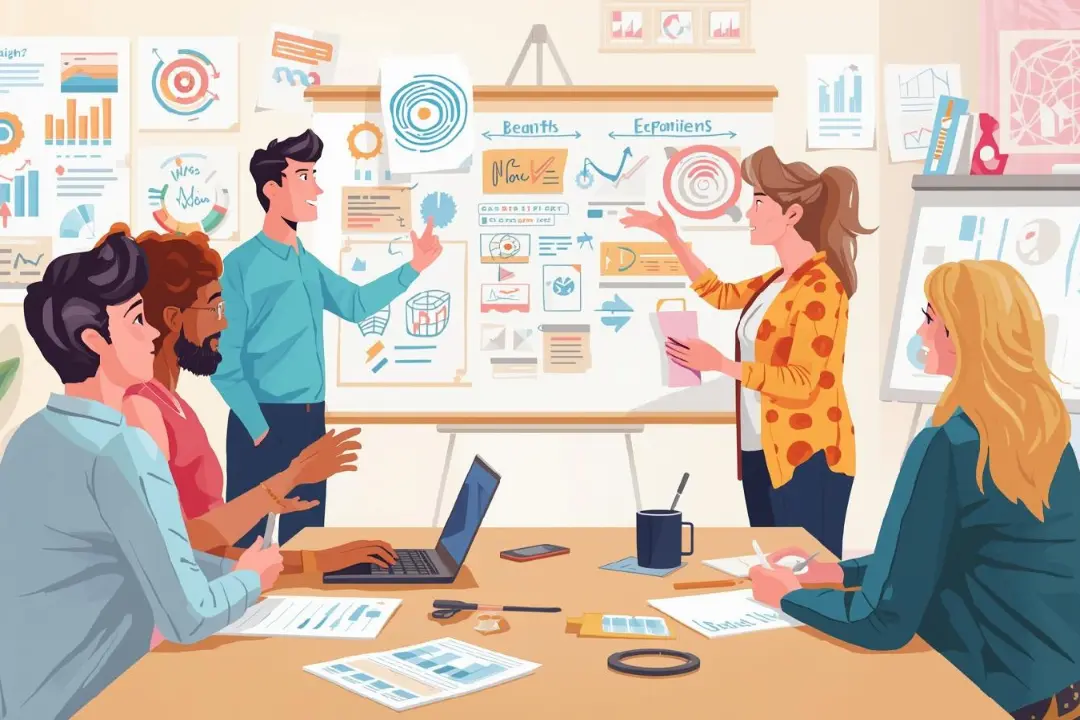
Without clean tracking, you're optimizing in fog. And fog costs money.
Care typically includes:
- Pixels/tags correctly integrated
- Neatly defined events (Lead, Purchase, AddToCart, etc.)
- Appropriately implemented consent management
- UTMs and clean campaign naming
- Data verification (test purchases/lead tests)
In Germany in particular, data protection is not a secondary issue. The following applies to cookies and tracking: Many tracking technologies require consent, unless they are technically absolutely necessary. The BfDI explains, for example, that the operator must be able to prove the technical necessity and gives examples of “technically necessary” cookies.
For campaign support, this means in practice:
- Only trigger tracking after consent (depending on the setup)
- Check and document consent logic
- Plan measurement pragmatically (attribution is never perfect)
Important: Support does not mean “just technology.” Tracking is a tool — decisions come from strategy + tests + learnings.
Creatives and offers
Creatives are the biggest performance lever in almost all paid channels today. Not because “design” is everything, but because creatives attract attention and make the offer understandable.
What performs well is often surprisingly “easy”:
- clear benefits in one sentence
- real images instead of a replaceable stock look
- Evidence instead of claim
- short sequences, quick structure
- Subtitles and clear typography
A practical creative framework:
- Hook: Problem or promise in 1-2 seconds
- Proof: result, process, customer voice, number
- Payoff: What is better after the solution?
- Next Step: What should the person do now?
For consistent support, you need creative routines:
- 3-5 hook variants per month
- 2-3 offer variants per quarter
- regular iterations of the winners
- clear rules for when a creative is “tired” (frequency, CTR, CPA)
If you want to neatly bundle video, content and design production for this, it's the perfect theme: media production (video, content, design).
Channels and structure
“Campaign support” often means that several channels work together. Typical combinations:
- Google Ads for clear demand
- Meta ads for scalable reach and retargeting
- LinkedIn ads for B2B with higher ticket
- YouTube for Awareness + Consideration
- SEO/content as an efficiency booster
It is important that channels do not work against each other. Care means:
- a joint offer
- a common funnel
- a common measurement model
- clear role per channel
A common problem is the wrong structure:
- too many campaigns and ad groups without data
- too many target group splits without signal strength
- too many changes at the same time
Better:
- clear “prospecting” level
- clean retargeting block
- stable budget logic
- few but strong creative tests
And for this to scale technically cleanly, you often need a website structure that can quickly display new pages, cases and offers. It fits here: cms web design agency for scalable websites.
Everyday optimization
Many underestimate what “care” really means: making decisions — every week.
A serious optimization cycle often looks like this:
Weekly
- Check budget distribution
- Check CPA/CPL/ROAS and trend lines
- Evaluate frequency and creative fatigue
- Check landing page data
- Identify and duplicate winners
fortnightly
- Bring new creatives live
- Improve target group signals (retargeting, lookalikes)
- Resharpen offers (proof, objections, friction)
monthly
- Reporting with learnings
- Hypotheses for new tests
- Funnel review (find bottlenecks)
- Re-prioritize
There is one principle: Don't change everything at the same time. Otherwise, you'll never know what worked.
Also important: Support is communication. Campaigns are strongest when your team can deliver quickly (approvals, material, feedback). If you are often in chaos internally, process and structural work is worthwhile, especially in growing teams in Munich: Munich office organization for structured processes.

Book now 15 min
contact: +49 151 6846 1306 · info@klarwerk-agentur.de
Save 30% today | Plan in 15 mins
Budget and scale
Scaling is not “more money.” Scaling is: more of what works — without efficiency collapsing.
Typical scaling levers:
- Bringing winning creatives to new target groups
- Expand retargeting cleanly
- Test landing page variants
- better offer mechanism (e.g. appointment, demo, audit)
- better lead quality through better pre-qualification
Pragmatic budget rules that often help:
- Budget enough to generate data (otherwise you'll learn too slowly)
- Increase gradually instead of by leaps
- Scale not on the basis of 24 hours, but on stable time windows
- Shift budget to winners, not to “hope campaigns”
Especially in Munich, markets are often expensive because many advertisers compete for the same attention. That means:
- Creatives must be more clear
- Proof must be stronger
- Landing page must be convincing faster
- Follow-up must react faster
Quality and compliance
Consistent success is achieved not only through performance optimization, but also through clean rules. In Germany, a “minor” error (labeling, data protection, imprint, claims) can quickly lead to problems.
Two important areas:
1) Advertising labeling and transparency
Advertising must be recognizable as advertising. The media companies provide guidelines and assistance with advertising labelling for online media and social media.
For campaign support, this means:
- clear labeling for influencer and collaboration content
- Separation of editorial and advertising content
- clean approval processes and documentation
2) Data protection and tracking
As above: consent logic, technically necessary cookies, comprehensible implementation. The BfDI explains the classification and examples of technically necessary cookies.
That is not a brake block — it is quality management. Good support thinks performance and compliance together.
Reporting and learnings
The best reporting is not “beautiful”, but Able to make decisions.
Strong reporting answers:
- What has improved or worsened — and why?
- Which hypothesis was correct? Which not?
- What are the 3 most important measures for the next period?
- Which creatives have won — and what patterns do we see?
Important practice rule:
- Don't just report figures. reports Learnings.
If you want campaigns to be measurably better, you need a learning cycle:
- Test → Result → Interpretation → Next Iteration
That is also the point at which an agency delivers real value: not just execution, but clear focus.
In many cases, it is worthwhile to strategically raise the profile of campaign support: Which offers should be advertised in the first place? Which customer segments are profitable? Which positioning makes sense specifically for Munich? For that, it fits: Business consulting & strategy.
Campaign support agency selection
Before you a Campaign support agency Assign, clarify three things: Expectations, Responsibility, Collaboration.
Pay attention to these criteria:
Process clarity
- Is there a fixed optimization rhythm?
- Are tests being planned or just “responding”?
- How are learnings documented?
Creative expertise
- How many creative variants are created per month?
- Are there clear hooks, proofs, offers?
- Can the agency iterate quickly?
Tracking and cleanliness
- Is the setup comprehensible?
- Are consent and measurement logic taken into account?
- Are there clean naming conventions and UTMs?
Business focus
- Is lead quality considered?
- Is there a look at the funnel and landing page?
- Are recommendations being implemented or are they just being reported?
cooperation
- Who delivers what and by when?
- How fast are approvals?
- Who is the contact person?
A simple selection signal:
- If an agency can tell you in 10 minutes Which test is the first makes sense and why, that's usually a good sign.
Start now 15 min
contact: +49 1579 2497112/+49 89 38169101 info@klarwerk-agentur.de
Save 30% today | Plan in 15 mins
FAQ
What does campaign support really mean?
Continuous optimization: goals, tracking, creatives, testing, budget and reporting in fixed routines instead of “setting them up once.”
How often should a campaign be optimized?
Check and improve in clear cycles at least once a week. Creatives are often renewed or iterated every 2—4 weeks.
Which KPIs are most important?
It depends on the destination. Leads usually include conversion rate, CPL and lead quality. For e-commerce ROAS, CPA and contribution margin.
Why do costs rise after a while?
Often due to creative fatigue, higher competition, too high frequency or because the funnel is not being optimized.
Do I need an agency or is in-house enough?
If in-house provides stable coverage of time, know-how, creative output and reporting routines, it goes internally. If not, an agency delivers structure and learnings faster.
conclusion
Consistent campaign results are not achieved through “a good setup,” but through clean support: clear goals, strong creatives, reliable tracking, consistent testing and reporting that enables decisions. Especially when it comes to competition in Germany and around Munich, this is the difference between campaigns that shine briefly — and campaigns that sell permanently.